
World Psoriasis Day: Why Psoriasis Flares in Fall and How an Asheville Dermatologist Can Help
Why October Matters for Psoriasis
October 29 is World Psoriasis Day, a global effort to raise awareness of a condition that affects more than 8 million Americans. It's also the time of year when many of our patients notice their psoriasis starting to act up. As the air cools and the leaves turn across the Blue Ridge, flares often become more frequent.
At Dermatology of North Asheville, we see firsthand how much psoriasis can affect daily life. This month, we want to help you understand the condition, separate fact from fiction, and keep your skin comfortable through fall and winter.
What Is Psoriasis?
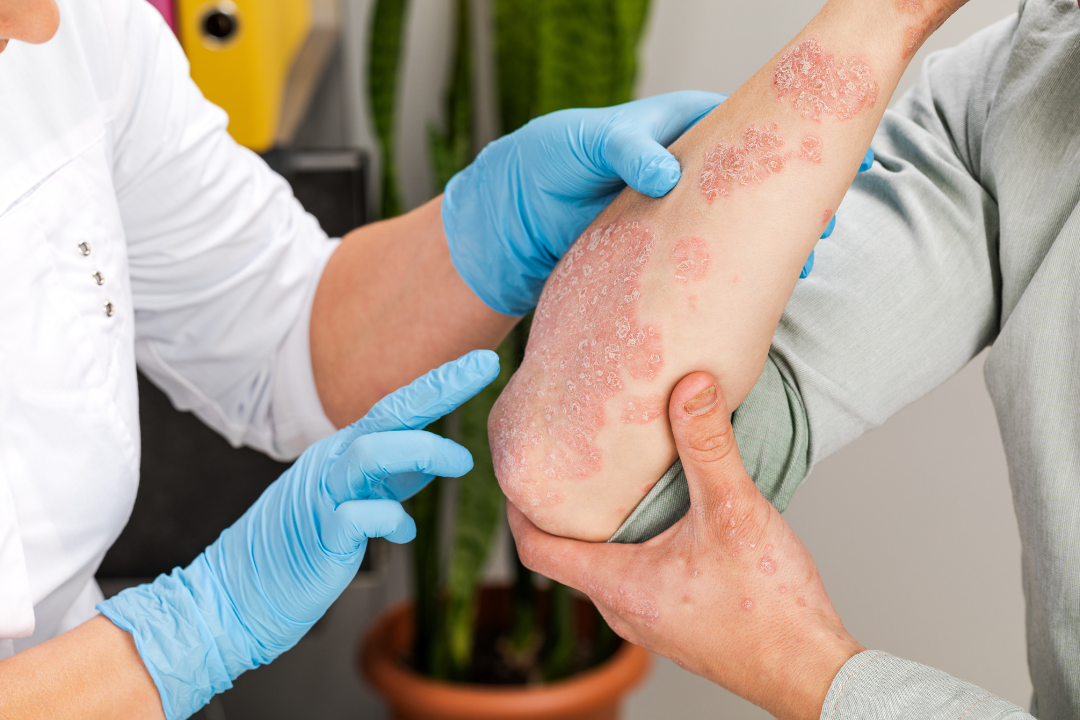
Psoriasis is a chronic, immune-mediated disease. An overactive immune system speeds up the growth of skin cells. Healthy skin renews itself over about a month, but with psoriasis, new cells rise to the surface in just a few days.
Because the body can't shed these cells fast enough, they build up into raised, scaly patches called plaques. On lighter skin, plaques usually look pink or red with silvery-white scale. On skin of color, they may appear purple, gray, or dark brown, which is one reason psoriasis is often underdiagnosed in patients with darker skin tones.
Plaques most often appear on the scalp, elbows, knees, and lower back, but psoriasis can also affect the nails, hands, feet, and skin folds.
Common Psoriasis Myths
Myth: Psoriasis is contagious.
You cannot catch psoriasis from someone else or spread it to another person through touch, swimming pools, or shared towels. It starts inside the body with the immune system, and genetics play a major role.
Myth: Psoriasis is caused by poor hygiene.
Psoriasis has nothing to do with how clean someone is. Harsh scrubbing can actually irritate the skin and make plaques worse.
Myth: Psoriasis is just a skin problem.
Psoriasis is a whole-body condition. Up to 30% of people with psoriasis develop psoriatic arthritis, which causes joint pain, stiffness, and swelling. Research also links psoriasis to a higher risk of heart disease, metabolic syndrome, and depression.
Myth: There's nothing you can do about it.
While there is no cure yet, psoriasis is very treatable. Today's options can clear or greatly reduce symptoms for most patients.
Why Psoriasis Flares Often Worsen in Fall
Psoriasis tends to come and go in cycles, and certain triggers can set off a flare. Several of the most common ones show up right as the seasons change.
Cooler, Drier Air
Asheville's crisp fall mornings are beautiful, but low humidity outside and indoor heating inside can dry out the skin. Dry, cracked skin is more likely to flare.
Less Sunlight
For many people, controlled amounts of natural sunlight help calm psoriasis. As the days get shorter, that benefit fades. Keep in mind that sunburn can also trigger a flare, so sun protection still matters on fall hikes.
Seasonal Illness
Infections, especially strep throat, are a well-known psoriasis trigger. Cold and flu season brings more opportunities for illness to set off a flare.
Stress
Busy school schedules and the lead-up to the holidays can raise stress levels, and stress is one of the most commonly reported triggers.
Skin Injuries
Cuts, scrapes, and bug bites can cause new plaques to form at the site of the injury. Fall yard work and time on the trails make these minor injuries more likely.
Other known triggers include smoking, heavy alcohol use, and certain medications. If you think a prescription may be affecting your skin, talk with your doctor before making any changes.
Tips to Manage Psoriasis This Fall
Moisturize every day: Apply a thick, fragrance-free cream or ointment within a few minutes of bathing to lock in moisture.
Keep showers short and lukewarm: Hot water strips the skin of natural oils.
Run a humidifier: Adding moisture to indoor air helps counter the drying effects of heat.
Choose soft layers: Breathable fabrics like cotton are gentler on plaques than scratchy wool.
Make time to unwind: A walk along the French Broad River Greenway or a scenic drive on the Blue Ridge Parkway can help ease stress.
Stay on your treatment plan: Keep using your treatment as directed, even when your skin looks clear, unless your dermatologist tells you otherwise.
Track your triggers: A simple skin journal can help you and your dermatologist spot patterns.
Treatment Options and When to See a Dermatologist
Psoriasis treatment is never one size fits all. Your plan depends on how much skin is affected, where the plaques appear, and how the condition impacts your daily life. Options include:
Topical treatments, such as corticosteroids and vitamin D analogs, for mild to moderate psoriasis
Phototherapy, which uses controlled ultraviolet light under medical supervision
Oral medications that calm the overactive immune response
Biologics, injectable medications that target specific parts of the immune system and can be highly effective for moderate to severe psoriasis
Schedule an appointment if you notice a rash that won't go away, plaques that are spreading or interfering with sleep or work, joint pain or stiffness, changes to your nails, or a treatment that no longer seems to work.
This World Psoriasis Day, let's make clearer, more comfortable skin your goal for the season ahead.
References
American Academy of Dermatology. (n.d.). Psoriasis: Overview. https://www.aad.org/public/diseases/psoriasis
Armstrong, A. W., Mehta, M. D., Schupp, C. W., Gondo, G. C., Bell, S. J., & Griffiths, C. E. M. (2021). Psoriasis prevalence in adults in the United States. JAMA Dermatology, 157(8), 940-946. https://doi.org/10.1001/jamadermatol.2021.2007
Mayo Clinic. (n.d.). Psoriasis: Symptoms and causes. https://www.mayoclinic.org/diseases-conditions/psoriasis/symptoms-causes/syc-20355840
National Psoriasis Foundation. (2022). Psoriasis statistics. https://www.psoriasis.org/psoriasis-statistics/
